

By Lyn Neeley
October 13, 2026
Heavy rain could not dissuade mass demonstrations of Venezuelans in cities across the country on October 7 to commemorate the 14th anniversary of Hugo Chávez’s final presidential electoral rally in 2012. The United Socialist Party of Venezuela (PSUV) mobilized six marches in Caracas in which workers, students, farmers, Indigenous communities and communal organizers converged downtown.

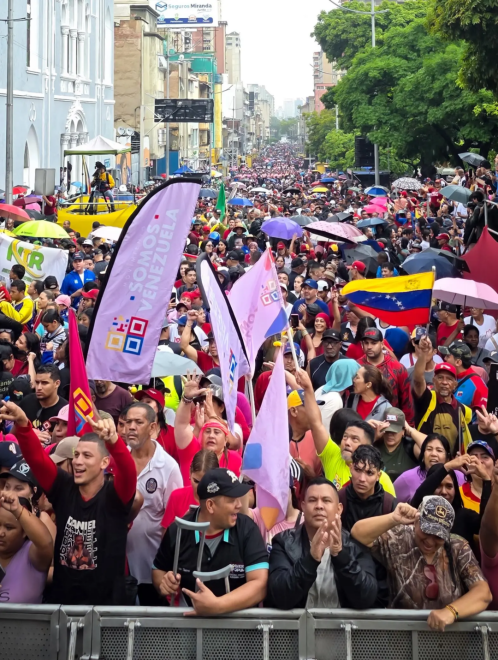
Caracas mobilization commemorating Chávez’s Oct. 7, 2012, electoral victory. (Photo credit: IG/@PartidoPSUV)
Yet this major grassroots mobilization of Venezuelan Chavistas, defending what they have achieved, had little coverage from U.S. media. Why?
General Diosdado Cabello, PSUV Secretary and head of security of police and the military, addressed the demonstration in Caracos, noting: “Chávez transformed the politics of this country.” He said the anniversary demanded recognition of both the electoral achievement and the personal sacrifice behind it. He championed the development of the communes, a model of “Popular Power” developed directly from the people rather than top-down state bureaucracies.
Venezuela’s second National Popular Consultation of 2026 will take place on Oct. 18 when communes will vote on 32,000 different community-based projects. There are currently 5,306 communes, with the expectation of increasing to 6,000. Cabello said the size and scale of this grassroots network provides the government with coordination on a massive scale. He said regional governments are increasingly required to adapt local agendas to the priorities of the communes.
Cabello reminded the crowd of Chávez’s achievements and personal sacrifices for the revolution. Coincidentally, Chávez’s reelection rally in 2012 also took place under torrential rain in Caracas. Yet, despite his illness, Chávez refused to change into dry clothes before addressing supporters who were themselves soaked.
The Orinoco Times wrote: “Cabello also challenged the class and imperialist contempt directed at Chavismo’s popular base. He defended the dignity of working people, Indigenous communities, and Afro-Venezuelans, emphasizing that their struggle sought equality rather than privileges for an elite. He highlighted that opponents who underestimated today’s grassroots movement were only repeating their earlier mistake of underestimating Chávez.
“On the movement’s immediate tasks, Cabello urged Chavistas to strengthen daily organization and lend critical support to Acting President Delcy Rodríguez across the different fronts of political work. He called for expanding support so Chavismo would be prepared to win whenever it next faced its opponents at the ballot box.” tinyurl.com/223jrpw3
Many children participating in the march had not grown up under the Chávez leadership. Cabello stressed “the responsibility of political education for young people about Chávez’s life and the Bolivarian Revolution is a serious responsibility for older generations.”
Cabello said: “Let us be like Chávez. That is the path.”


